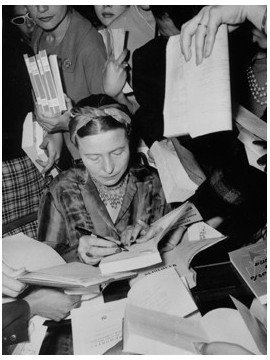
On the occasion of the one hundred year anniversary of the birth of Simone de Beauvoir (january 1908), Domenique Gros evokes the personality of the novelist and philosopher, but also of the political militant and feminist. The film encounters the richness and complexity of this woman, in the light of a time rich in upheavals.
On the occasion of the one hundred year anniversary of the birth of Simone de Beauvoir (january 1908), Domenique Gros evokes the personality of the novelist and philosopher, but also of the political militant and feminist. The film encounters the richness and complexity of this woman, in the light of a time rich in upheavals.
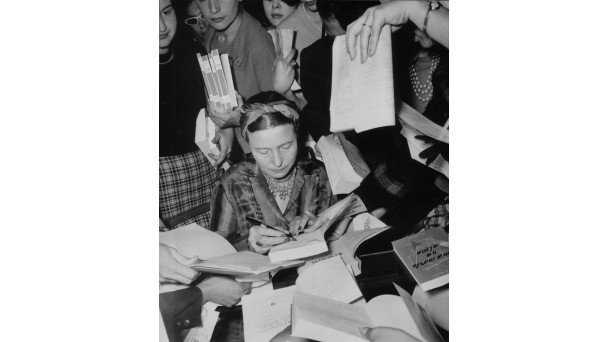
The film will bring to life Simone de Beauvoir, French woman writer, whose birth centenary falls in January 2008. A philosopher, a political militant and a feminist, but also a woman, with her many complex facets. A woman directly in the spotlight of an era rich in social upheaval. Through her life and works, we are witnesses, too, to a demi-century of French intellectual and political life. Simone de Beauvoir is known throughout the world for her feminist essay The Second Sex. Her works champion the emancipation of women, possible only through the achievement of autonomy. She thus denounces a society which alienates the female gender, a society from which women must separate themselves in order to become free. For de Beavoir "one is not born a woman, one becomes one".
The couple she formed with Jean-Paul Sartre was a pillar of literary and political life from the 1940s to the 1970s. Their political commitments, from the end of the Second World War on, formed them as left-wing intellectuals, as existentialists and anti-colonialists. They met aged 20, never really lived together, but remained united for better or for worse in a relationship which was particularly unconventional for their time, and made of de Beauvoir a symbolic woman, a model to imitate or to reject. News since her death in 1986? Yes indeed: in 1997 the discovery of her 17 year liaison with the American writer Nelson Algren caused a scandal! Were the perfect couple nothing but a pair of bourgeois adulterers? Not so simple... All her life Simone de Beauvoir loved and was loved by other men than Sartre - and he knew it. Bost the faithful friend is one of her first lovers, then Nelson Algren, the future film-maker Claude Lanzmann, and her inheritor Sylvie le Bon. The Sartre-Beauvoir couple had chosen to place themselves above all convention, living side by side, in order to write, to bear witness, to philosophise, and to act on the world.
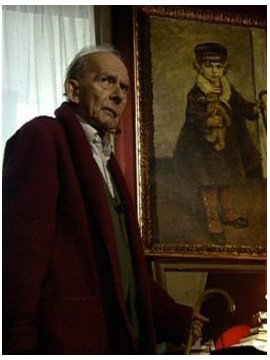
The film begins and ends, of course, in Paris: In the early morning, mist over the Seine… a slender bridge linking the left and right banks, by the Bibliothèque François-Mitterrand: it bears the name of Simone de Beauvoir…. We will end our evocation of the life of Simone de Beauvoir with Saint-Germain-des-Prés, and the whole of Paris, spread out before us from the height of the Montparnasse Tower. Spanning these two points, we will have travelled to the United States, visited the key sites of her Parisian life, and will have heard and I hope listened to a many-voiced I remember... Rooted in private photo archives, newsreel and film, via interviews with living witnesses, the commentary will be based on the writings of Simone de Beauvoir. From the very beginning, and right to the end of the film it speaks directly to the viewer; it is Simone de Beauvoir who has the last word.
Data sheet